
Chief Medical Officer Program
Emory is Ranked Among the Top 25 National Universities by the US News & World Report
Invalid liquid data
Invalid liquid data
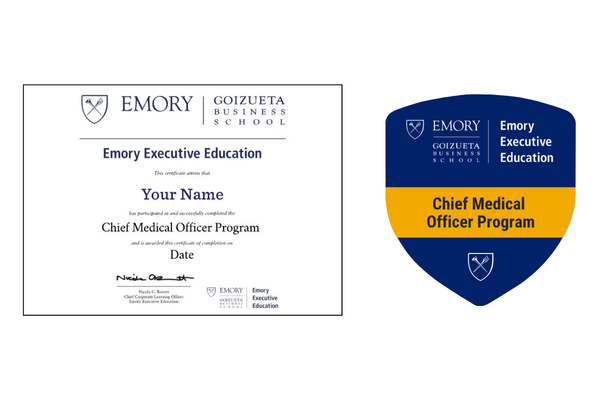
Step Into the C-Suite as a Visionary Medical Leader
Executive Credential Backed by Emory’s Legacy
Emory University is home to some of the nation's top-ranked schools in public health, nursing, and medicine and is globally recognized for academic excellence and leadership in health care. Through the Chief Medical Officer Program, you will also have the opportunity to earn six academic credits that can be applied toward select graduate programs at Emory’s Goizueta Business School — including the Executive MBA — enabling a potential pathway to a formal degree from this prestigious institution.
Earn CME Credits from a Trusted Institution
The Emory University School of Medicine is accredited by the Accreditation Council for Continuing Medical Education (ACCME) to provide continuing medical education for physicians. This blended learning activity has been designated for a maximum of 185 AMA PRA Category 1 Credits™, which includes up to 78 AMA PRA Category 1 Credits™ for the two selected electives. Physicians should claim credit only in proportion to the extent of their participation in the activity.
CMO Forum: A Leadership Experience
Network with peers, faculty, and industry leaders during the optional one-and-a-half-day CMO Forum dedicated to health care innovation and strategic leadership priorities.
Lead With Vision at the Intersection of Care and Strategy
The Chief Medical Officer Program from Emory Executive Education translates these demands into a clear leadership path. Over 9 to 12 months, this program will equip you with the business lens, operational tools, and leadership frameworks to make high-stakes decisions, align diverse stakeholders and teams toward productive outcomes, and lead innovations to drive impactful change across care and business models.
This program will help you:
- Lead teams around a shared vision that aligns patient care, workforce needs, and business strategy
- Strengthen communication, negotiation, and influence to drive decisions and manage conflicts
- Build financial acumen to impact strategic and organizational performance
- Navigate competing priorities across units, organizations, industries, and communities
- Drive change, foster innovation in care, and embed a culture of excellence and well-being
300+
95%
Source: Emeritus Impact Survey Year 2024
Faculty Insights and Learner Experiences

Learning Journey

Curriculum
Core Modules | Online and Live Online | 18 Weeks
The Complexity of Health Care and Leading through Complexity
Competing Priorities in Health Care: Learn to navigate competing priorities in health care through consistent decision making, leadership traits, strategic thinking, contextual frameworks, and informed discussions.
Social Determinants of Health: Understand how to assess and address social determinants of health through strategic interventions, system-level integration, and targeted risk mitigation to improve patient outcomes.
Strategic Thinking and Execution: Learn to craft strategic plans, evaluate options, analyze value creation, and navigate competitive threats to strengthen organizational advantage.
Health Care Economics — Watch the Money Flow: Explore strategies to enhance access, manage health care costs, measure quality, and uphold ethical principles within your organization’s care model.
Executive Presence and Professional Communication: Build executive presence by assessing your delivery, tailoring messages to key stakeholders, and crafting a clear, compelling communication strategy.
Influence Without Authority: Develop the ability to influence without authority by understanding stakeholder interests, aligning solutions, and evaluating power dynamics.
Executing Your Health Care Strategy
Leading Your Organization’s Culture: Understand and align organizational culture with strategy by considering regional and contextual differences in health care.
Lean Process Improvement: Apply lean tools to enhance process flow, improve efficiency, analyze organizational opportunities, and develop process improvement initiatives.
Leading Organizational Change Well: Learn to lead change by diagnosing resistance, planning strategically, and tracking leadership impact.
Talent Management: Develop leadership and coaching strategies to manage talent, boost performance, and guide team mastery.
Teams and Teamwork: Identify traits of high-performing teams, assess team dynamics, and implement strategies to enhance collaboration.
Advanced Negotiations: Develop negotiation and conflict resolution skills by increasing self-awareness, fostering collaboration, and applying strategic approaches to complex organizational challenges.
Finance for the Non-Financial Manager: Learn to interpret financial documents, conduct variance analysis, and apply budgeting techniques to ensure financial health.
Assessing and Communicating Organizational Success
Measuring Organizational Performance: Develop and align performance metrics with strategic goals to effectively measure organizational success.
Measuring and Rewarding Individual Performance: Design effective compensation and motivational strategies while managing decision authority and impact.
Organizational Design: Assess and redesign organizational structures using tools, including strengths, weaknesses, opportunities, threats (SWOT) and recommend, agree, perform, input, decide (RAPID), to support strategic transformation.
Population Health: Understand population health dynamics, analyze data, and create policies that address public health challenges.
Wellness and Well-Being: Design and present a well-being initiative by assessing current practices, exploring evidence-based resources, and understanding the leadership role in promoting wellness.
Electives | Online | Six Weeks Each | Choose Any Two
In this program, you have the opportunity to select two six-week electives designed to align with your career goals and the evolving demands of health care leadership. These modules sharpen your expertise and build practical skills essential for leading change in clinical practice and organizational operations.
Capstone Project
Apply program knowledge to address a real-world business challenge
Work individually or in small groups to ideate and develop solutions
Make strategic decisions and create actionable plans
Deliver a business plan for immediate organizational impact
Live Faculty-Led Online Sessions
Build the strategic clarity required to lead AI adoption in health care through live, application-focused sessions that address both opportunity and risk. These sessions help you interpret AI’s growing role across clinical care, operations, and governance while equipping you to ask the right questions, evaluate real-world use cases, and lead responsibly in a rapidly evolving landscape.
A Chief Medical Officer’s Guide to Leading in the AI Era
This introductory “AI starter pack” is designed for health care executives seeking a grounded, strategic understanding of AI. The session demystifies key AI concepts, explores practical use cases across clinical and operational domains, and highlights the critical questions CMOs must ask as AI becomes integral to health system decision making.
Medical AI and the Law
As AI adoption accelerates across health care, CMOs must navigate evolving legal, ethical, and operational complexities. This session examines how AI is reshaping diagnostics, care delivery, and workforce oversight while addressing risks, including algorithmic bias, data privacy, and vendor accountability. You will gain frameworks to evaluate emerging technologies and lead AI adoption responsibly while safeguarding clinical integrity and organizational trust.
Balancing Stability and Change in Organizational Strategy
In an increasingly dynamic health care landscape, CMOs must distinguish between momentary deviations and signals that demand strategic change. This session explores how to assess shifting conditions through real-world case studies while examining the need for continuous strategy reassessment in complex environments. You will gain frameworks to evaluate when change is necessary and to lead with clarity, balancing financial realities with mission-driven care.
CMO Forum (1.5 Days)
The CMO Forum is a one-and-a-half-day, academic experience designed to extend the learning journey beyond the core modules. While optional, the forum is strongly recommended, offering participants a unique opportunity to engage directly with renowned faculty and accomplished leaders from leading healthcare organizations. Discussions will centre around innovation, emerging trends, and strategic priorities shaping the future of healthcare.
Designed to foster meaningful connections, the forum brings together current participants, alumni, faculty, and industry experts to reconnect, exchange insights, and explore shared challenges and goals in healthcare leadership.
Note: Participation in the CMO Forum is optional but highly recommended. A separate registration fee of US$350 applies.
Note: Session topics and the final list of electives are indicative and subject to change
Driving impact with AI in healthcare

AI in Clinical Leadership
Understand how AI is shaping clinical judgment, care delivery, and operational priorities across modern health systems.

AI Risk, Ethics, and Regulation
Apply structured approaches to assess legal, ethical, and governance implications of AI in clinical and organizational settings.

AI in Care Delivery Systems
Align data, processes, and teams to integrate AI into diagnostics, workflows, and patient care environments.

Expert Perspectives on AI
Learn from faculty-led sessions that examine real-world AI applications, adoption challenges, and evolving CMO responsibilities.
Electives
Executive Decision Making for Healthcare Leaders
Develop data-driven decision-making skills using analytical frameworks for clinical and administrative contexts.
Strategic Leadership in Healthcare
Apply systems-level leadership to navigate complexity, align stakeholders, and drive innovation.
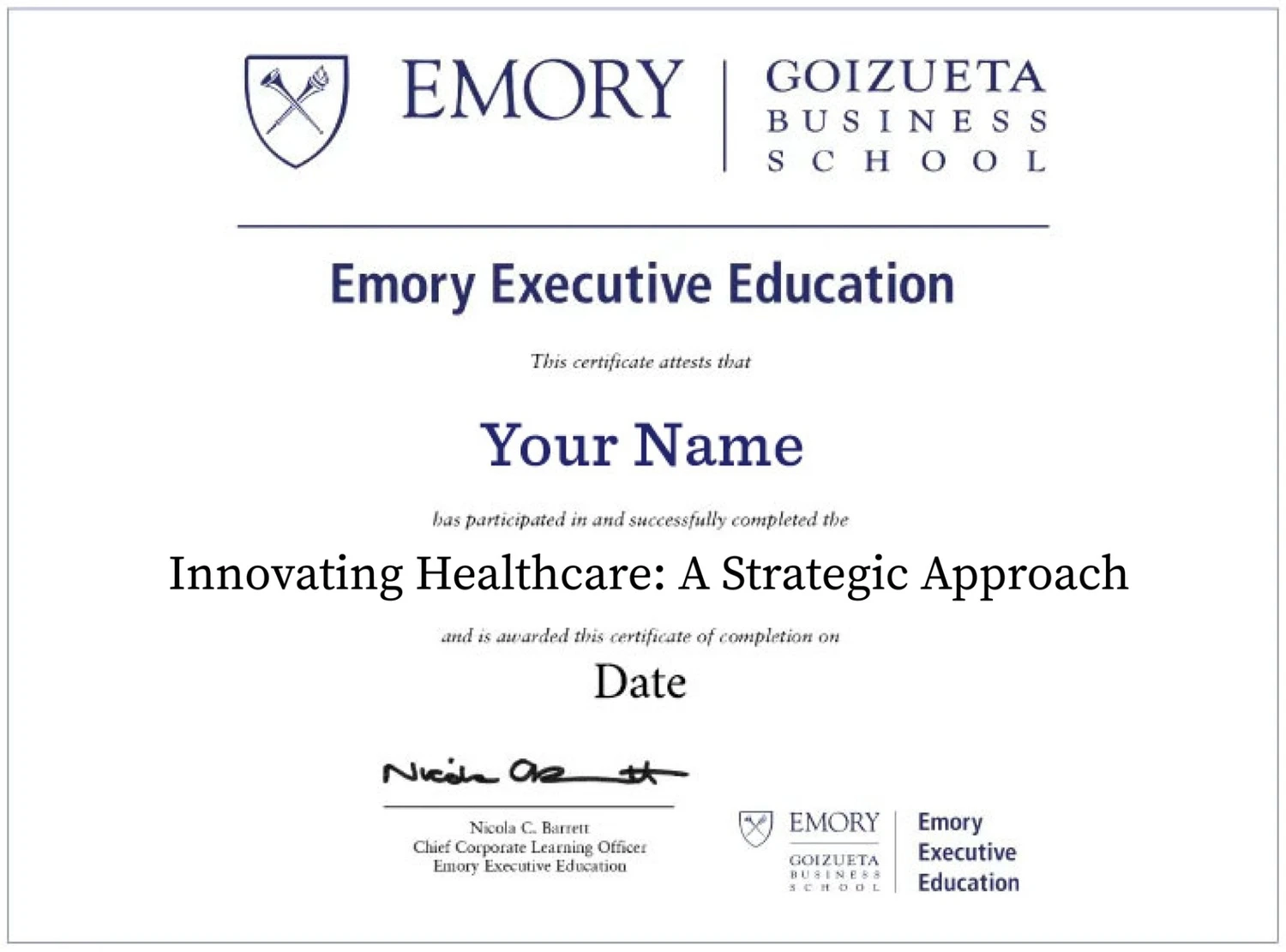
Innovating Healthcare: A Strategic Approach
Design and implement innovative care models that improve outcomes and create sustainable value.
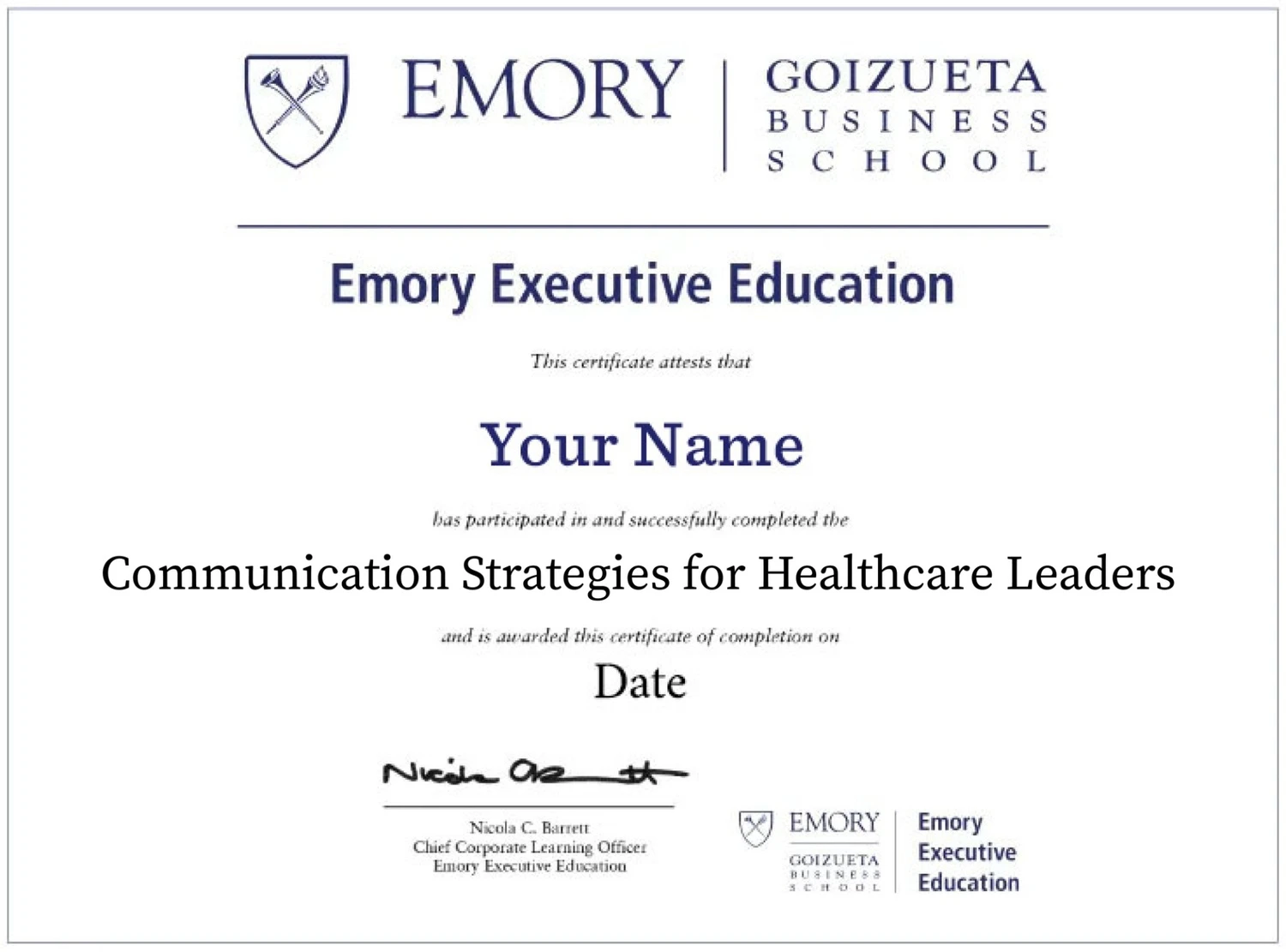
Communication Strategies for Healthcare Leaders
Enhance clarity, influence, and storytelling to communicate effectively across clinical and executive teams.
Note: All certificate images are for illustrative purposes only and may be subject to change at the discretion of Emory Executive Education.
Meet the Faculty

Michael Sacks, PhD
Faculty Director, Professor in the Practice of Organization & Management, Goizueta Business School, Emory University; Faculty Director, Woodruff Leadership Academy, Emory Woodruff Health Sciences Center
Michael Sacks’ work focuses on strategic leadership and aligning leadership skills with organizational culture to drive successful execution. His teaching spans leadership dev...
Tim Cunningham, RN, DrPH, MSN, FAAN
Program Director, Focus Area for Compassion and Ethics, Task Force for Global Health; Former Vice President of Practice and Innovation, Emory Healthcare; Adjunct Associate Professor, Nell Hodgson Woodruff School of Nursing, Emory University
Tim Cunningham’s work explores how compassion, resilience, and structural well-being can transform health care systems and support frontline professionals. His research and pr...

Molly Epstein, PhD
Professor Emerita in the Practice of Organization & Management, Goizueta Business School, Emory University
Molly Ryan Epstein’s work explores how strategic communication influences leadership effectiveness, focusing on change communication, intergenerational collaboration, and gend...
Brad Haws
Chief Executive Officer, University of Iowa Health Care Clinical Enterprise
Bradley Haws, MBA, is the Chief Financial Officer at Emory Healthcare, bringing over 30 years of leadership experience in health care finance and strategy. He has held senior ...

Ozgecan Kocak, PhD
Associate Professor of Organization & Management, Goizueta Business School, Emory University
Özgecan Koçak’s research explores how shared cultural codes, including organizational identities, categorization systems, and communication norms, influence decision making, c...

Rebecca Martin, PhD
President, Global Immunization at Sabin Vaccine Institute; Former Director, Center for Global Health, Emory University
Rebecca Martin’s work focuses on global health leadership, policy, and public health system strengthening across international settings. Her career spans over 30 years in glob...

Rod McCowan, PhD
Founder and Chief Catalyst, Accelerance Group International; Former Associate Professor in the Practice of Organization & Management, Goizueta Business School
Rod McCowan’s work centers on strategic change leadership and executive development, exploring how leadership alignment, organizational culture shifts, and neuro‑leadership fr...

Rachel E. Patzer, PhD
President and Chief Executive Officer, Regenstrief Institute Inc.
Rachel Patzer’s research centers on health services and disparities in care, particularly in access to kidney transplantation and health care quality. Her work designs and tes...
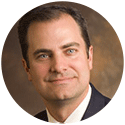
Dane Peterson
Chief Operating Officer at Children's Health; Former President and Chief Operating Officer, Emory Healthcare; Former Chief Financial Officer, Emory Healthcare
Dane Peterson’s leadership focuses on health care operations, organizational strategy, and performance improvement in complex academic medical systems. His work explores how e...
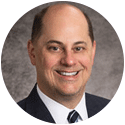
Chad Ritenour, MD
Professor of Urology, Emory University School of Medicine; Vice Chair of Education and Faculty Affairs, Department of Urology; Former Co-Chief Well-Being Officer, Emory University
Chad Ritenour’s work focuses on physician well-being, academic leadership, and innovation in urologic care delivery. His efforts explore how faculty development and efficient ...

Karen Sedatole, PhD
Asa Griggs Candler Professor of Accounting, Goizueta Business School, Emory University
Karen Sedatole’s work investigates how performance measurement systems, executive compensation structures, and forecasting shape organizational trust, motivation, and strategi...

Tom Smith, PhD
Professor in the Practice of Finance, Goizueta Business School, Emory University
Thomas Smith’s research explores how macroeconomic trends, labor dynamics, and industry structures influence leadership decisions and organizational performance. His work span...

Peter Topping, PhD
Professor Emeritus in the Practice of Organization & Management, Goizueta Business School, Emory University
Peter Topping’s research examines how leaders navigate paradox, conflict, and change to build high-performance teams across organizational boundaries. His work explores why le...

Krysia Wren, PhD
Organizational Psychologist

Marilyn Margolis, RN, MN, NEA-BC
Faculty Co-Director; Chief Executive Officer, Emory Johns Creek Hospital; Adjunct Instructor, Nell Hodgson Woodruff School of Nursing
Past Participant Profile
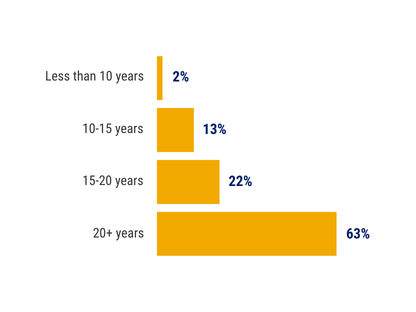
Work Experience
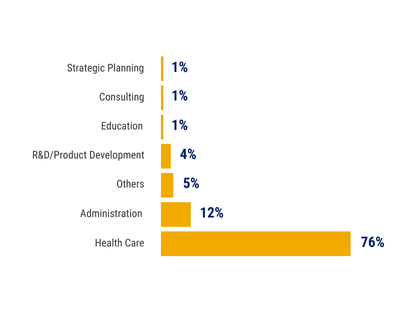
Top Industries
Where Past Learners Come From










Disclaimer: All product and company names are trademarks or registered trademarks of their respective holders. Use of product and company names does not imply any affiliation with or endorsement by the holders. The list of companies is only indicative and not exhaustive.
Hear What Our Participants Have To Say
Who Is This Program For?
The Chief Medical Officer Program is ideal for:
Physician leaders in management roles preparing for a CMO position and seeking a deeper understanding of business strategy and medical leadership within health care organizations
New or early-tenure CMOs who have served in the position for five years or less seeking to deepen their knowledge of management to be successful leaders in the health care industry
Participants are expected to have:
A medical degree from an accredited medical school
Fluency in written and spoken English
FAQs
Who will be collecting the payment for the program?
Emeritus collects all program payments, provides learner enrollment and program support, and manages learning platform services.
What is the program refund and deferral policy?
For the program refund and deferral policy, please click the link here.
Are there any restrictions on the types of funding that can be used to pay for the program?
Program fees for Emeritus programs with Emory Executive Education may not be paid for with (a) funds from the GI Bill, the Post-9/11 Veterans Educational Assistance Act of 2008, or similar types of military education funding benefits (b) Title IV financial aid funds.
Does the Chief Medical Officer Program qualify as a continuing medical education program?
Yes, the Chief Medical Officer Program is an advanced-level continuing medical education program designed for physician leaders. It blends clinical leadership, business acumen, and strategic thinking and offers the opportunity to earn 185 AMA PRA Category 1 Credits™.
Who is the program designed for?
This program is ideal for physician leaders preparing for a CMO role as well as early-tenure CMOs seeking to strengthen their medical leadership acumen and drive innovation across their organizations.
Does this program cover both clinical and business aspects of healthcare?
Yes, the program bridges the gap between clinical expertise and business strategy. You will learn frameworks and leadership tools that align medical leadership with healthcare management and organizational success.
What is the time commitment for this program?
The Chief Medical Officer Program is designed for busy medical professionals. You can expect to spend three to five hours per week, allowing you to balance the program with your work responsibilities while gaining valuable medical leadership skills and knowledge.
How does Emeritus support accessibility for learners?
Emeritus is committed to making high-quality education accessible and affordable to individuals, companies, and governments around the world. If you have questions about accessibility or would like to discuss available support options before enrolling, please contact accessibility@emeritus.org. For more information about our accessibility practices, please review our Accessibility Policy here.
Connect with a Program Advisor for a 1:1 Session
Our program advisors have helped senior executives around the world choose the right program for their career goals. Schedule a 1:1 to get a deeper understanding why the Chief Medical Officer Program is the right fit for you.
Email: emory_cmo@emeritus.org
Phone: +1 567 350 1214 (U.S.) / +44 1174 633354 (U.K.) / +971 80 0035703747 (U.A.E.) / +52 55965 34231 (LATAM)
Early applications are encouraged. Admissions are reviewed on a first-come, first-served basis.
Flexible payment options are available.
Starts On